

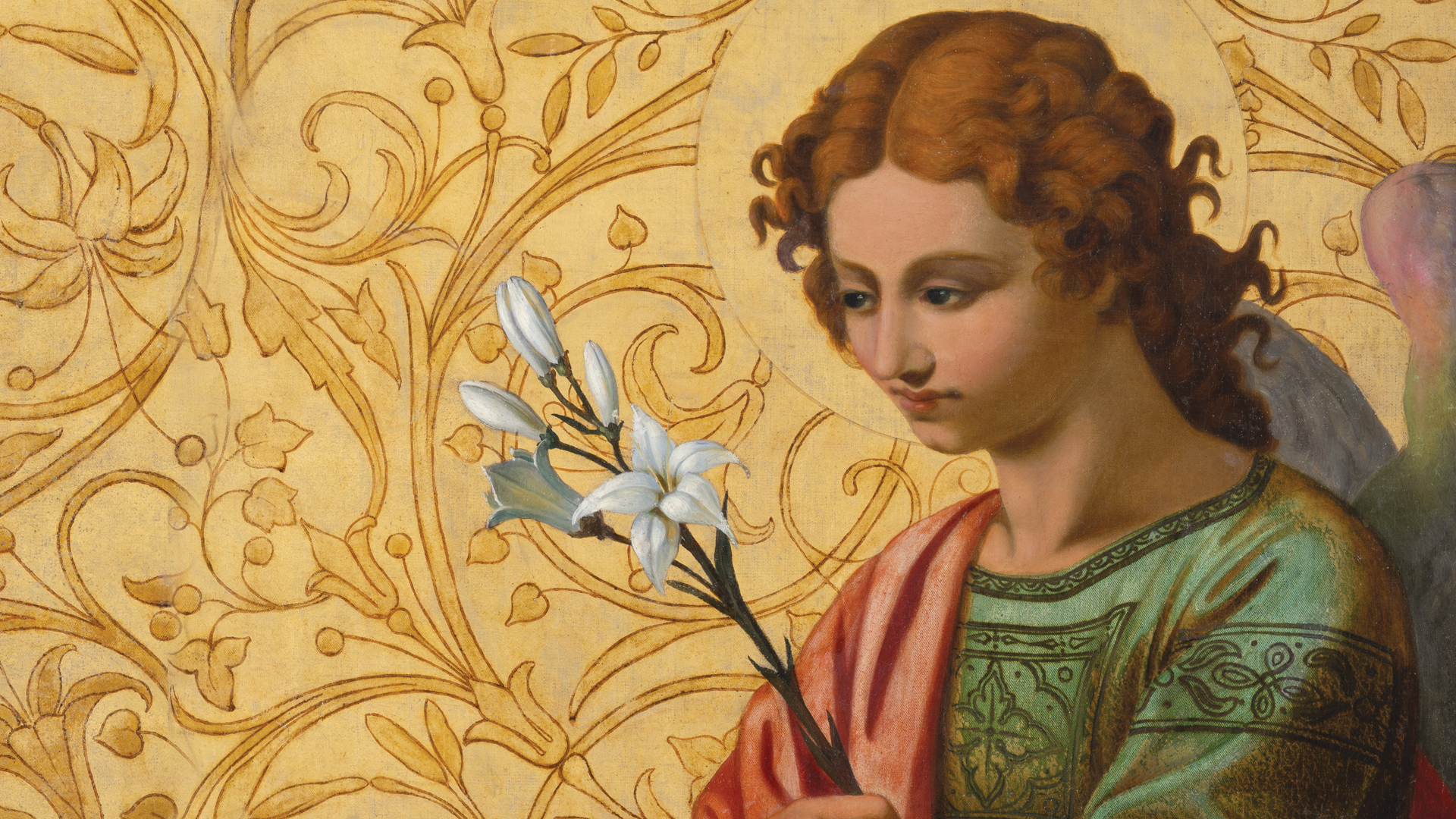
Aksentije Marodić: A quest for eternal beauty
In the year in which Matica srpska celebrates a major anniversary — the bicentenary of its founding — the Gallery of Matica srpska is devoting special attention to an artist whose life and work are inextricably linked to this oldest Serbian scientific, literary and cultural institution. The exhibition Aksentije Marodić: A quest for eternal beauty offers the most comprehensive overview of the work of this important Serbian painter ever presented.
The official opening of the exhibition will take place on Friday, 16 October, at 8 p.m. The opening ceremony will feature addresses by Dr Tijana Palkovljević Bugarski, Director of the Gallery of Matica srpska; Dr Snežana Mišić, Museum Advisor and curator of the exhibition; and Professor Dr Saša Brajović, art historian.
Aksentije Marodić (Subotica, 1838 – Novi Sad, 1909) was an exceptionally talented artist, an intellectual of broad cultural interests, and an active participant in public life and the work of the most important national institutions of his time. He left a profound mark on the history of Serbian art and culture in the nineteenth century. Throughout his life, in his search for eternal beauty and enduring values, he created a distinctive artistic oeuvre grounded in contemporary European artistic practices of the 1860s and 1870s, particularly the visual idiom of the Late Nazarene movement, Historicism and the ideas of Realism. His greatest contribution was in the field of religious painting, above all through his work on the iconostasis for the church of Kovilj Monastery. With this work, he introduced new artistic approaches, as well as new visual and iconographic concepts, into the territory of the Metropolitanate of Karlovci. A devoted follower of the Late Nazarene tradition, Marodić drew inspiration from Italian Renaissance and Baroque painting. His engagement with celebrated masterpieces of European art went far beyond mere copying: while adhering to the dogmatic principles of the Serbian Orthodox Church, he reinterpreted and adapted these works on his canvases, creating original works of art.
Marodić’s artistic vision emerged at the intersection of European and national artistic traditions. His studies at the Academy of Fine Arts in Vienna, his travels throughout Italy, and his direct encounters with the works of the Old Masters left a lasting impression on his art. The exhibition therefore also introduces visitors to the artists who served as his models, including Raphael, Guido Reni, Leonardo da Vinci and Anthony van Dyck, while tracing the paths through which Marodić developed his own distinctive painterly language.
Through a thematically diverse body of work distinguished by exceptional technical skill and thoughtful engagement with the question of national art, Aksentije Marodić made an important contribution to the development of Serbian painting in the nineteenth century. His active involvement in the work of Matica srpska, together with his role in visually shaping its Pantheon, secured him a lasting place in the history of this oldest national cultural and scholarly institution. Thus, in the year marking Matica srpska’s bicentenary, we revisit the work of one of its earliest favoured painters, offering an opportunity to explore Marodić’s artistic achievements and public engagement in their entirety and to situate him at the very heart of Serbian art and cultural history.
The exhibition brings together more than 110 works of art and other objects from numerous museum and private collections, many of which are being presented to the public for the first time. Alongside works from the collections of the Gallery of Matica srpska and Matica srpska, the exhibition features pieces from the collections of the Eparchy of Bačka, the National Museum of Serbia, the Eparchy of Srem, the Eparchy of Dalmatia, the Museum of the Serbian Orthodox Church, the National Museum of Montenegro, the Subotica City Museum, the Belgrade City Museum, the Novi Sad City Museum, the Serbian National Theatre and the Karlovci Gymnasium.
A particular highlight of the exhibition is the presentation of the iconostasis from the church of Kovilj Monastery, Marodić’s most significant and monumental work. Its display has been made possible by a major conservation and restoration project carried out by the Gallery of Matica srpska and the Provincial Institute for the Protection of Cultural Monuments in Petrovaradin between 2024 and 2026. The restored iconostasis forms the centrepiece of the exhibition, allowing visitors to encounter Marodić’s exceptional painterly skill first-hand and discover the innovative solutions he developed throughout his artistic career.
Contemporary technologies further enrich the exhibition experience, thanks to the contributions of Assoc. Prof. Dr Isidora Đurić, Prof. Dr Igor Kekeljević, Filip Mirčeski, MA, and Miloš Platiša. An interactive map traces Marodić’s travels through Italy, highlighting the places he visited and described, while multimedia content introduces visitors to the works of art before which he studied and refined his painting skills.
The exhibition is accompanied by a bilingual catalogue authored by Dr Snežana Mišić, Museum Advisor and curator of the exhibition. The publication offers an important contribution to the renewed interpretation and appreciation of Marodić’s rich artistic legacy. Two documentary films also accompany the exhibition: one devoted to the conservation and restoration of the iconostasis from the church of Kovilj Monastery, and the other to the life and work of Aksentije Marodić. Both films are directed by Miroslav Stajić of Mista Production.
The exhibition programme will be further enriched by a varied series of accompanying events held on Fridays at 7 p.m., as well as curator-led tours on weekends at 1 p.m. and 5 p.m. A special family guide has also been prepared for parents and children, bringing the work of Aksentije Marodić closer to younger visitors.
The project was realised with the blessing of His Eminence Irinej, Metropolitan of Bačka, in cooperation with the Provincial Institute for the Protection of Cultural Monuments in Petrovaradin, the Austrian Cultural Forum Belgrade and the Italian Institute of Culture in Belgrade.
The project was made possible by the Ministry of Culture of the Republic of Serbia and the Provincial Secretariat for Culture, Public Information and Relations with Religious Communities, with the support of DDOR Novi Sad.